Artificial Intelligence in Corporate Travel and Business Travel Management | GBTA 2026
05.09.2026 11:21
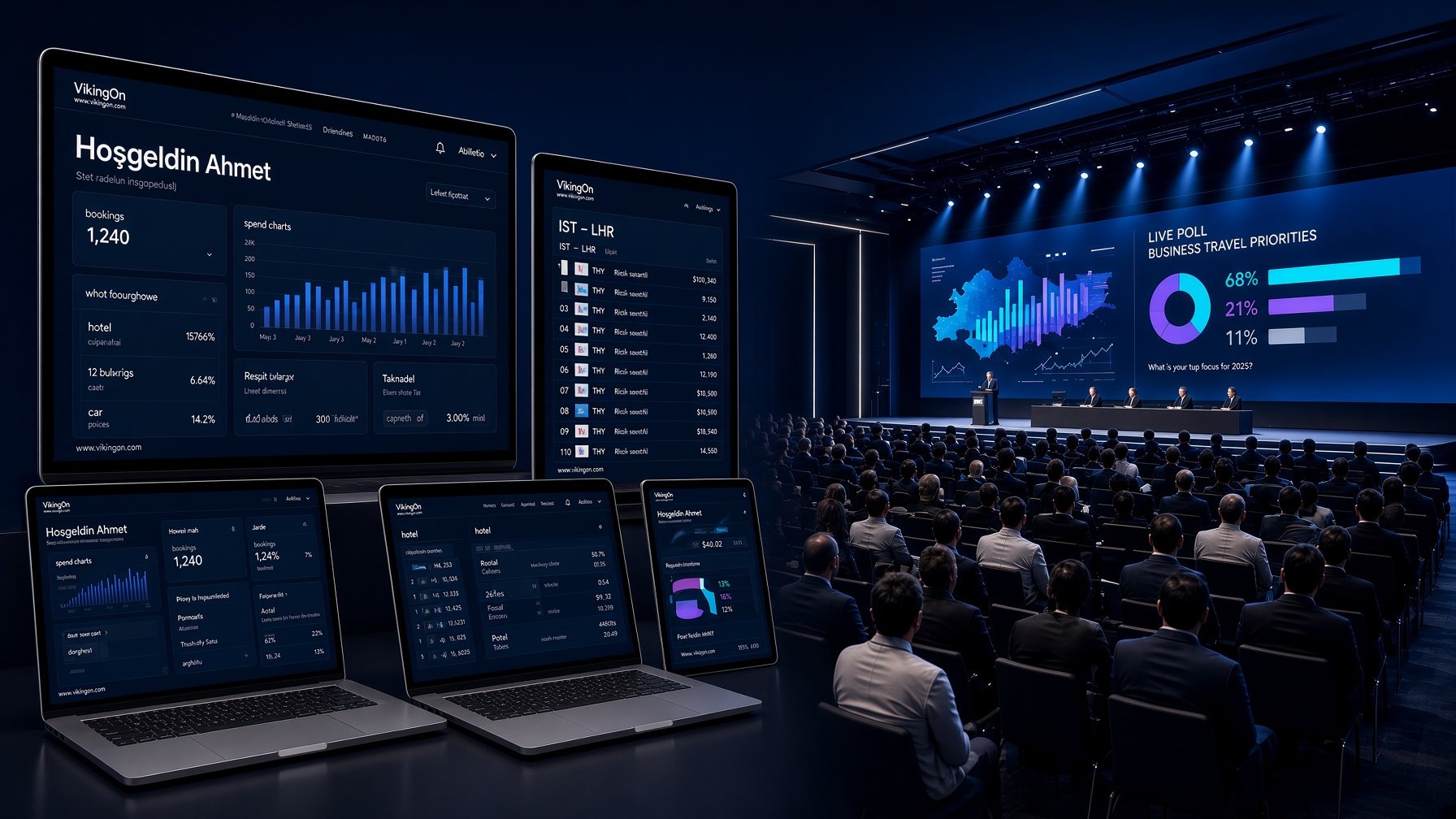
More than 470 travel managers spoke at GBTA Convention 2026. Explore the future of artificial intelligence, human support, TMCs, MICE, and travel technology in corporate and business travel management.
A New Era in Corporate Travel and Business Travel Management: GBTA 2026 Findings
Corporate travel and business travel management are changing rapidly. While artificial intelligence, online booking tool systems, automation, and travel technologies are taking on an increasingly important role in companies’ travel programs, the importance of human support and working with an experienced travel management company continues.
So how do professionals managing corporate travel programs view this transformation?
More than 470 corporate travel managers and travel buyers shared their views during the Buyer Buzz session organized by the Global Business Travel Association (GBTA) as part of the 2026 Convention.
The result is quite clear: The future of business travel will be shaped not only by technology, but by the combination of technology, human support, and a strong travel management partnership working together.
According to the results published by GBTA on August 28, 2026, travel managers have a positive attitude toward artificial intelligence; however, they do not want to hand over control entirely to technology. At the same time, managing change within the organization, building the right supplier partnerships, and providing uninterrupted support to employees are becoming increasingly important.
Artificial Intelligence Is Now Permanent in Corporate Travel Management
More than 78% of travel managers who participated in the GBTA Convention 2026 Buyer Buzz session stated that they actively use generative artificial intelligence.
The more striking result is that 92% of participants believe artificial intelligence will make their roles more strategic rather than eliminate them.
This result shows that the primary role of artificial intelligence in corporate travel management is not to replace people, but to enable travel managers to analyze information faster, compare the right options, and manage the company’s travel program more effectively.
AI and automation are expected to have an increasing impact particularly in the following areas:
- Comparing business travel options
- Recommending reservations that comply with the company travel policy
- Evaluating flight and hotel alternatives
- Analyzing travel expenses
- Budget and cost control
- Travel reporting
- Managing changes that occur during travel
However, travel managers do not have unlimited trust in artificial intelligence.
64% of participants consider misinformation and AI hallucinations to be significant risks.
For this reason, corporate travel technology needs to be not only fast, but also backed by an experienced travel team capable of verification.
Should Artificial Intelligence Automatically Apply the Company Travel Policy?
One of the most important issues in corporate travel management is ensuring that the company’s travel policy is applied correctly.
In the GBTA research, participants were asked whether artificial intelligence should automatically enforce the travel policy.
The result was almost evenly divided:
51% believe artificial intelligence could automatically enforce the travel policy.
49% prefer AI to recommend the most suitable option while leaving the final decision to a human.
This result is an important indicator of how future online booking tools (OBTs) and corporate travel platforms may evolve.
Technology can:
- check company policy,
- rank alternatives,
- flag options outside the budget,
- automate approval processes,
but human support will still be necessary in complex or exceptional situations.
The Real Challenge in Business Travel Management Is Not Technology
One of the most notable findings of the GBTA research is that technology is not the biggest problem faced by travel managers.
57% of participants stated that their biggest challenge is influencing internal stakeholders and convincing them to embrace change.
Changing employees’ travel behavior ranked second at 43%.
Therefore, the role of a modern corporate travel manager is not limited to managing flight tickets or hotel reservations.
A successful travel manager must also:
- create the company travel policy,
- ensure employees comply with the policy,
- manage costs with finance teams,
- develop supplier relationships with procurement teams,
- ensure management supports the company’s travel strategy
at the same time.
The fact that 78% of participants identified change management as the most important skill for travel professionals further confirms this.
Where Does Innovation Come From in Corporate Travel Programs?
There is also a notable finding regarding the source of innovation.
64% of participants stated that innovations in their travel programs arise from their company’s own business needs rather than trends in the external market.
Therefore, the same corporate travel model may not be right for every company.
For example;
the needs of sales teams that travel frequently are different,
the needs of companies with international operations are different,
the travel processes of companies that organize extensive MICE programs are different,
the service expectations of companies with a large number of executive travelers are different.
The role of a good Travel Management Company (TMC) or travel management company is not to impose a standard system on the client, but to develop the travel program according to the company’s actual business needs.
Companies Expect More Than Just Reservation Services from TMCs
The GBTA results also indicate an important change in supplier relationships.
92% of participants believe that the best supplier relationship should be built on a long-term partnership.
Only 8% stated that competitive pressure is more important.
This result shows that the TMC model in the corporate travel industry is also changing.
Companies no longer expect travel agencies to provide only:
- flight tickets,
- hotel reservations,
- car rentals,
- transfers
Corporate companies also expect travel management companies to manage:
- travel cost control,
- travel policy management,
- reporting,
- technology integrations,
- online booking systems,
- travel safety,
- 24/7 support,
- MICE and meeting management
from a single center.
The fact that 77% of participants believe innovation accelerates when buyers push suppliers to improve also shows that a strong TMC-client relationship needs to be strategic, not merely operational.
Technology Is Important in Business Travel, but Human Support Remains Critical
Corporate travel technologies have advanced significantly in recent years.
Online booking tool systems, mobile travel applications, automated approval mechanisms, and AI-powered travel solutions can complete many processes within seconds.
However, not every situation in business travel follows a standard process.
When flight cancellations, weather conditions, strikes, visa issues, missed connections, last-minute schedule changes, or regional security issues arise, experienced human support becomes important.
In the GBTA research, 58% of participants stated that the most important element of travel safety is continuous human response and support.
Therefore, a successful corporate travel model should provide both sides together:
Technology + Human Support
Technology should accelerate routine processes; expert travel advisors should step in when situations become complex or critical.
Why Are MICE and Group Travel More Complex?
Corporate travel consists of more than individual business trips.
Company meetings, congresses, incentive programs, launches, dealer meetings, and corporate events also make up a significant portion of companies’ overall travel programs.
64% of GBTA Convention 2026 participants believe group and meeting travel is more difficult to manage than individual business travel.
The main reasons include:
- managing a large number of travelers simultaneously,
- group flight ticket processes,
- hotel allocations,
- transfer planning,
- meeting and event logistics,
- budget control,
- last-minute changes
among others.
Therefore, having MICE and corporate travel management operate under the same structure can provide an operational advantage, particularly for large companies.
What Kind of Model Does VikingOn Offer in Corporate Travel Management?
Four key expectations stand out from the GBTA research:
Smart technology, human support, long-term partnership, and reducing complexity.
VikingOn’s corporate travel management approach is also built around managing these four areas together.
VikingOn helps companies manage:
- flight tickets,
- hotels,
- transfers,
- visas,
- MICE and event processes
under a single corporate travel structure.
Through its online booking tool infrastructure, travel policies, company limits, approval workflows, and reporting processes can be managed digitally.
However, VikingOn is not merely travel software.
Behind the platform is the experienced travel team of Viking Turizm, which has been providing corporate travel and business travel services since 1984.
With this model, technology accelerates routine processes, while experienced travel advisors and a 24/7 support team step in when necessary.
This allows companies to benefit both from the speed of online corporate travel technology and the human support of a traditional TMC service.
How Is the Future of Corporate Travel Taking Shape?
The message from the GBTA Convention 2026 results is clear.
Corporate travel managers are not opposed to technology.
On the contrary, they want to use artificial intelligence and automation more effectively.
However, the successful business travel program of the future will not be built solely around technology.
Companies will need the right technology + the right travel policy + reliable data + experienced human support + a strong TMC partnership.
For companies conducting business travel in Türkiye, it is becoming increasingly important to evaluate not only reservation prices but also technology infrastructure, reporting, operational support, MICE capabilities, and service quality during crises when choosing the right corporate travel management company.
For detailed information about corporate travel and business travel solutions:
VikingOn – Corporate Travel Management
vikingon.com | 0850 281 VIKI
Frequently Asked Questions
What is the difference between business travel and corporate travel?
Business travel generally refers to travel undertaken by an employee for a specific business purpose. Corporate travel management, on the other hand, covers the centralized management of all company business travel, including policy, reservations, costs, reporting, safety, and supplier management.
What is an Online Booking Tool?
An Online Booking Tool, or OBT, is a corporate travel system that enables company employees to book flight tickets, hotels, and other travel services online in accordance with company policies.
Why should companies work with a travel management company?
Working with a travel management company makes it easier for companies to centrally control travel expenses, implement travel policies, provide support to employees, and manage flight, hotel, transfer, visa, and MICE processes from a single center.
Which is more important in a corporate travel program: technology or human support?
Both are important. While technology accelerates reservation and approval processes, experienced human support plays a critical role in situations such as flight cancellations, last-minute changes, or crises.